
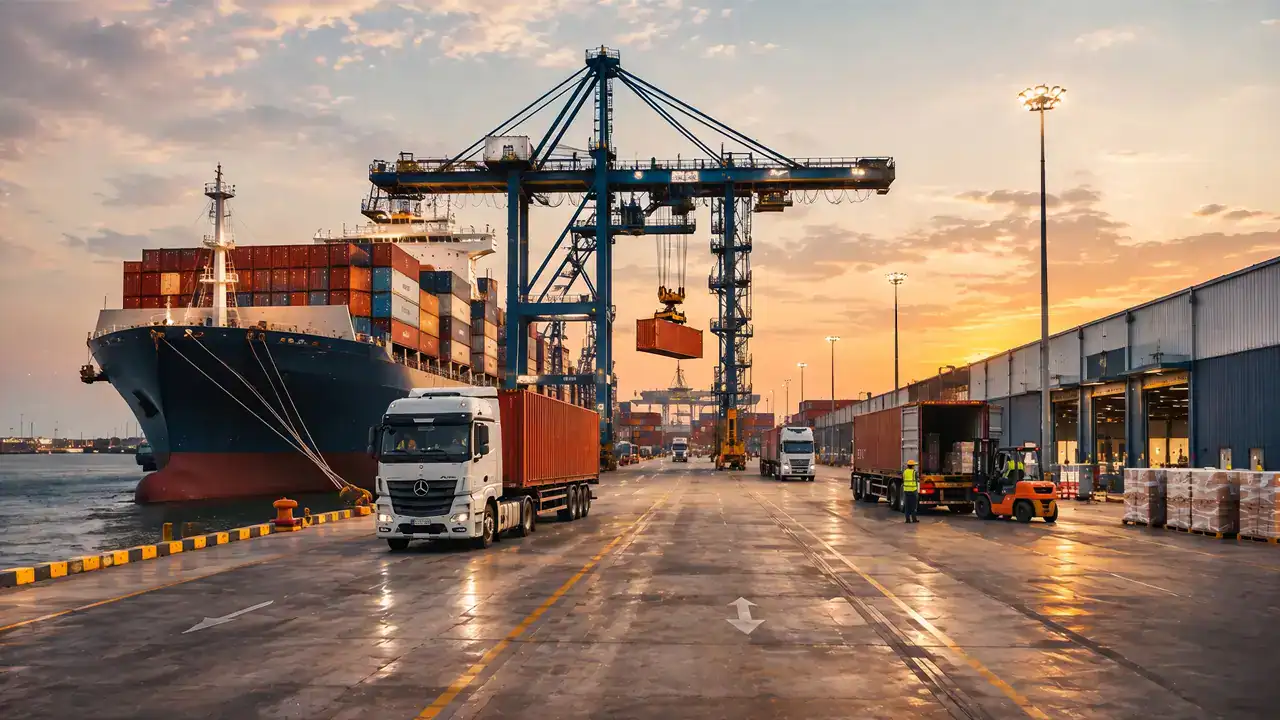
Container transport from the port to the factory is an essential part of the supply chain, as any delay in customs clearance, truck preparation, or delivery scheduling can affect the arrival, production schedules, and delivery deadlines. Therefore, successful container transportation does not depend on providing a truck alone, but on coordinating every stage, from the moment the container arrives until it reaches its final destination.
In this article, we will explore the steps involved in transporting containers from the port to the factory, the required documents, how to choose the right trucking container solution, ways to avoid delay charges, the factors affecting transportation costs, and the key criteria for choosing a reliable container transport company.
How Is a Container Transported from the Port to the Factory? A Quick Overview
Container transport from the port to the factory involves several interconnected stages, each requiring advance preparation to minimize the possibility of delays.
- Customs Clearance: Completing the required procedures and documents to obtain permission for the container to leave the port.
- Booking the Right Truck: Selecting a suitable truck based on the container type, weight, and nature of the cargo.
- Coordinating Container Release from the Port: Ensuring the container is ready, completing the collection requirements, and monitoring schedules to reduce potential delays and additional charges.
- Inland Transportation: Moving the container to the factory according to the agreed route and delivery plan.
- Delivery and Unloading: Confirming the container’s arrival, coordinating the unloading process, and returning the empty container when required and in accordance with the transportation terms.
Coordination between these stages is the key factor in reducing wasted time and avoiding additional costs that may result from poor planning.
Step 1: Customs Clearance for the Container
Before a container can leave the port, it is essential to ensure that all required customs procedures have been completed and the necessary approvals have been obtained, depending on the nature of the goods and the port where the shipment arrived.
Procedures vary depending on the type of goods, the import system, the submitted documents, and any additional requirements applicable to the shipment. Therefore, it is important to monitor the customs clearance status early and avoid relying solely on the vessel’s arrival date when scheduling container transport.
Documents Required for Customs Clearance
The documents used in import procedures may include the following, depending on the nature of the shipment and applicable requirements:
- Commercial Invoice: Provides details of the goods, their value, and the seller’s and buyer’s information.
- Packing List: Outlines the shipment contents, weights, and packaging details.
- Bill of Lading: The document associated with the sea transportation of goods and the shipment details.
- Customs Documents: Declarations and information required to complete the import procedures.
- Certificates of Origin or Conformity: When required according to the nature of the goods and applicable regulations.
- Special Permits and Approvals: If the goods are subject to additional regulatory or inspection requirements.
This list is for guidance purposes and is not a standardized list for every shipment. It is best to confirm the specific documents required for your shipment with your customs broker and the relevant authorities.
Tip to Avoid Delays: Prepare the documents and review all information before the shipment arrives whenever possible. Make sure the details on the bill of lading, commercial invoice, and packing list match the actual shipment information.
Step 2: Booking the Right Truck for Container Transport
After confirming that the container can be collected, the next stage is arranging the appropriate transportation vehicle. However, booking the first available truck is not enough; the container’s dimensions, weight, type, road conditions, and delivery location requirements must all be considered.
Advance planning helps coordinate the truck’s arrival with the container’s readiness, instead of having the truck arrive before the procedures are completed or arrive too late after the available collection window has passed.
The Difference Between Transporting 20-Foot and 40-Foot Containers
Choosing the right truck depends on the container type, its specifications, gross weight, and transportation requirements, not just its length.
| Comparison | 20-Foot Container | 40-Foot Container |
| Nominal External Length | Approximately 6.06 meters | Approximately 12.19 meters |
| Standard External Width | Approximately 2.44 meters | Approximately 2.44 meters |
| Standard External Height | Approximately 2.59 meters | Approximately 2.59 meters |
| Approximate Cubic Capacity | Around 33 m³ | Around 67–68 m³ |
It is also necessary to consider the permitted gross weight, cargo distribution, truck and trailer capacity, and any relevant traffic or operational restrictions.
For specialized containers, such as refrigerated or open-top containers, it is essential to ensure that the transportation vehicle and its equipment are suitable for the container type.
Step 3: Container Release from the Port and How to Avoid Demurrage Charges
After completing customs clearance and arranging the truck, the next stage is releasing the container from the port. This is one of the most important stages in port container transport, as any coordination delay can result in additional costs or disrupt the transportation plan.
One of the important terms at this stage is Demurrage, which refers to charges that may apply when a container remains inside the port or terminal beyond the permitted free time, according to the terms set by the shipping line or relevant authority.
It is also important to distinguish between Demurrage and Detention charges, which may apply when the consignee keeps the container outside the port beyond the permitted free time, with definitions and conditions varying depending on the agreement.
To reduce the possibility of incurring these charges, the following steps are recommended:
- Continuously monitor the vessel’s arrival date and customs clearance status.
- Confirm the available free time and its expiration date.
- Arrange the truck before the expected container readiness date.
- Ensure that all collection and port entry requirements have been completed.
- Coordinate between the customs broker, transportation company, and consignee.
- Prepare an alternative plan to handle schedule changes or truck unavailability.
The key point: Do not wait until the container is ready for collection before starting to look for a truck. Early coordination between all parties helps reduce waiting times and unplanned costs.
Step 4: Inland Container Transport from the Port to the Factory
After the container leaves the port, its inland transportation journey to the factory begins. At this stage, transportation efficiency depends on selecting the appropriate route, preparing the truck, considering the nature of the cargo, and coordinating with the delivery location.
Before departure, it is important to ensure that the container transport trucks being used are suitable for the container type and weight, and that the cargo is secured according to transportation and safety requirements.
It is also necessary to review the factory location and confirm that the truck and trailer can access the site, with sufficient space available for maneuvering, waiting, and unloading.
The key factors involved in organizing the journey include:
- Selecting the appropriate route based on road conditions and traffic restrictions.
- Ensuring that the cargo complies with permitted weight and dimension limits.
- Considering peak traffic hours and restrictions on truck movement.
- Coordinating the arrival time with the person responsible for receiving the shipment at the factory.
- Ensuring that the unloading area is ready before the container arrives.
Good journey planning is not limited to reducing travel time; it also involves preventing the truck from arriving at the factory when the necessary receiving facilities are unavailable.
Tracking the Container During Transportation
Monitoring the container during transportation helps improve coordination between the transport company and the factory, especially when production operations depend on arriving at a specific time.
Tracking and updates may include:
- Confirming the container’s departure from the port.
- Updating the transportation status and estimated arrival time.
- Reporting any delays caused by road conditions or operational circumstances.
- Communicating with the factory well before arrival.
- Confirming the container’s arrival and completing the delivery procedures.
Monitoring does not necessarily require an advanced electronic tracking system in every case; what matters is having a clear and reliable way to exchange information and update the estimated arrival time whenever changes occur.
Step 5: Container Delivery and Unloading at the Factory
The arrival of a container at the factory does not automatically mean that the transportation process is complete. The delivery location must be ready to receive the truck and carry out unloading according to the nature of the goods and safety requirements.
Before the truck arrives, it is recommended to confirm the following:
- The receiving and unloading area is ready.
- The necessary workforce and equipment are available.
- There is sufficient space for the truck and trailer to maneuver.
- All documents required to complete the delivery are available.
- The person responsible for receiving the container and inspecting its condition has been identified.
- Procedures for handling any damage or discrepancies during transportation have been agreed upon.
After unloading, the next step for the empty container must be determined according to the transportation terms and shipping line requirements, including the designated return location and deadline.
Delays in returning empty containers may result in additional charges. Therefore, unloading and empty container return schedules should be coordinated as part of the transportation plan from the beginning.
Container Loading Methods
The method of loading or unloading a container varies depending on its condition, the nature of the goods, the packaging method, and the equipment available at the factory.
Full Container Transportation
When transporting a container loaded with goods, it is essential to ensure that the cargo weight and distribution comply with the permitted operational limits of the truck, trailer, and road.
The main considerations include:
- Knowing the container’s gross weight.
- Ensuring that the cargo is properly distributed inside the container.
- Checking that the doors and locking mechanisms are securely closed.
- Using a transportation vehicle suitable for the container type.
- Following cargo securing and safety procedures.
The unloading equipment available at the factory must also be suitable for the weight and nature of the goods, whether unloading is carried out manually or using handling equipment.
Empty Container Transportation
Transporting an empty container may require different equipment and coordination compared to a loaded container, particularly when moving it back to a container depot or another location designated by the relevant authority.
Before transportation, it is important to confirm:
- The container’s condition and delivery requirements.
- The compatibility of the truck and trailer with the container dimensions.
- The container’s return location and scheduled deadline.
- Any special instructions from the shipping line or responsible authority.
Early coordination for empty container returns helps reduce the possibility of delays and charges associated with exceeding the permitted free time.
Types of Containers That Can Be Transported
Cargo containers vary depending on the nature of the shipment and its transportation and storage requirements. Selecting the appropriate transportation vehicle requires understanding the container type, dimensions, weight, and any special equipment it may require.
The most common container types include:
- Dry Containers: Used for transporting general cargo that does not require temperature control.
- 20-Foot Containers: Suitable for various types of shipments, subject to weight, dimensions, and transportation requirements.
- 40-Foot Containers: Provide additional cargo space for shipments that require greater loading capacity.
- High Cube Containers: Offer greater internal height compared to standard containers of the same length.
- Reefer Containers: Used for goods that require temperature control, such as certain food and pharmaceutical products.
- Open-Top Containers: Suitable for certain types of cargo that require top loading, depending on the nature of the shipment.
- Flat Rack Containers: Used for certain types of equipment, oversized cargo, or irregularly shaped goods that require special loading arrangements.
- Tank Containers: Used for transporting liquids or certain materials in tanks specifically designed for this purpose.
Not all container types are suitable for every truck or trailer. Refrigerated containers, for example, may require consideration of power supply and operational requirements, while flat rack and open-top containers may require special cargo securing arrangements.
Therefore, the container type must be accurately identified when requesting a transportation service so that the company can arrange the appropriate vehicle.
Container Transport Insurance
Insurance is one of the aspects that should be discussed when planning container transport from the port to the factory, especially when the shipment is high-value or sensitive to damage.
It is important to distinguish between cargo insurance and coverage related to the carrier’s liability or damage to the container itself, as each may be subject to different terms and exclusions.
Before transportation begins, review the following points:
- Is there an insurance policy covering the cargo during inland transportation?
- Which risks are covered, and what exclusions apply?
- Are there compensation limits or special conditions related to the type of goods?
- Who is responsible for reporting damage or accidents?
- What documents are required when submitting an insurance claim?
You should not assume that having marine insurance automatically means that all stages of inland transportation are covered. The policy must be reviewed to confirm the actual scope of coverage.
It is also recommended to document the container’s condition upon collection and delivery, and keep relevant documents and Photographic Evidence when necessary.
What Factors Affect the Cost of Transporting Containers from the Port to the Factory?
The cost of container transportation varies depending on the container specifications, route, and operational requirements. Therefore, a single fixed price cannot be applied to all transportation journeys.
The main factors affecting transportation costs include:
- Distance Between the Port and the Factory
Differences in distance and road conditions affect the journey requirements and associated operational costs.
- Container Size and Type
The cost of transporting a 20-foot container may differ from that of a 40-foot container. Specialized containers may also require additional equipment or arrangements.
- Cargo Weight
Weight affects the selection of the appropriate truck and trailer, as well as the requirements for complying with permitted load limits.
- Waiting and Delay Charges
Delays in collection or unloading may result in additional charges according to the agreed terms. Other charges may also apply when the specified free time is exceeded.
- Transportation Timing
Collection and delivery schedules, operational requirements, and traffic restrictions may affect truck availability and journey planning.
- Special Shipment Requirements
Some containers may require additional equipment or precautions, such as refrigerated containers or cargo that needs special handling arrangements.
- Empty Container Return
It is important to determine whether the transportation cost includes returning the empty container or whether this service is calculated separately.
To receive a clear quotation, prepare the container details, collection port, factory address, cargo weight, type of goods, required transportation date, and any special delivery requirements.
How to Choose a Reliable Container Transport Company
Choosing a suitable container transport company helps organize the operation and reduce operational risks. When comparing different companies, focus on the following criteria:
- Operational Experience: The company’s experience in transporting containers from ports to factories and warehouses.
- Truck Availability: The ability to provide the appropriate transportation vehicle within the required timeframe.
- Advance Coordination: Having a clear process for coordinating container readiness, collection schedules, and delivery appointments.
- Shipment Tracking: The ability to receive transportation updates and manage any changes to the delivery plan.
- Transparent Pricing: Understanding which services are included and identifying any potential additional charges before transportation begins.
- Safety Compliance: Ensuring that the truck and trailer are suitable and comply with cargo weight and road safety requirements.
- Problem Management: Having a plan to deal with breakdowns, delays, or changes to collection schedules.
The right company is not necessarily the one offering the lowest price, but the one providing services that match your shipment requirements while clearly defining its responsibilities, costs, and schedules from the beginning.
Why Choose Naqla for Container Transport from Port to Factory?
When looking for a container transport company, importers need more than just a truck to move goods from one location to another. They need a service that helps organize the transportation process, coordinate schedules, clarify costs, and monitor the shipment until delivery.
Naqla aims to meet the needs of businesses looking for inland cargo transportation solutions, with a focus on organizing transportation operations and coordinating between the relevant parties.
When choosing Naqla for your container transport requirements, it is important to identify the shipment details and operational needs from the beginning. This helps assess the appropriate transportation vehicle and coordinate the collection and delivery schedules.
You can prepare the following information before requesting the service:
- The port where the container arrives.
- The factory address or delivery location.
- The container type and size.
- The shipment’s gross weight.
- The date when the container will be ready for collection.
- The required delivery date.
- Unloading requirements and empty container return arrangements.
The clearer the shipment information, the easier it becomes to assess transportation requirements and plan the journey accordingly.
If you are looking for a solution to transport containers from the port to your factory, start by identifying your shipment details and collection schedule, then contact Naqla to explore the transportation options that suit your requirements.
Conclusion
Successful container transport from the port to the factory depends on coordinating an entire series of procedures, starting with customs clearance and document preparation, followed by truck booking, container release monitoring, and inland transportation, all the way through delivery, unloading, and empty container return when required.
To minimize delays and additional costs, make sure to prepare documents in advance, choose the appropriate transportation vehicle, monitor free time limits, and maintain continuous coordination between the customs broker, transportation company, and factory.
Ultimately, efficient container transportation is not simply about reaching the destination; it is about planning every stage so that it works seamlessly with the others without unnecessary disruption. With clear shipment information, proper coordination, and the right container transport company, businesses can improve their operational planning and support the continuity of their factory supply chains.